From coax to full fibre, nationwide.

A national operator is migrating its cable network to fibre to the home across the Republic of Ireland — 52,300 homes constructed as at September 2026, through infrastructure that was never designed to carry fibre. BYNTGroup delivers the physical build end to end: survey and design support, duct proving and blockage clearance, fibre pulling and blowing, chamber construction, splicing and testing, through to the records that let a home be released for service.

Reusing what is already in the ground is the cheap part. Making it carry fibre is the work.
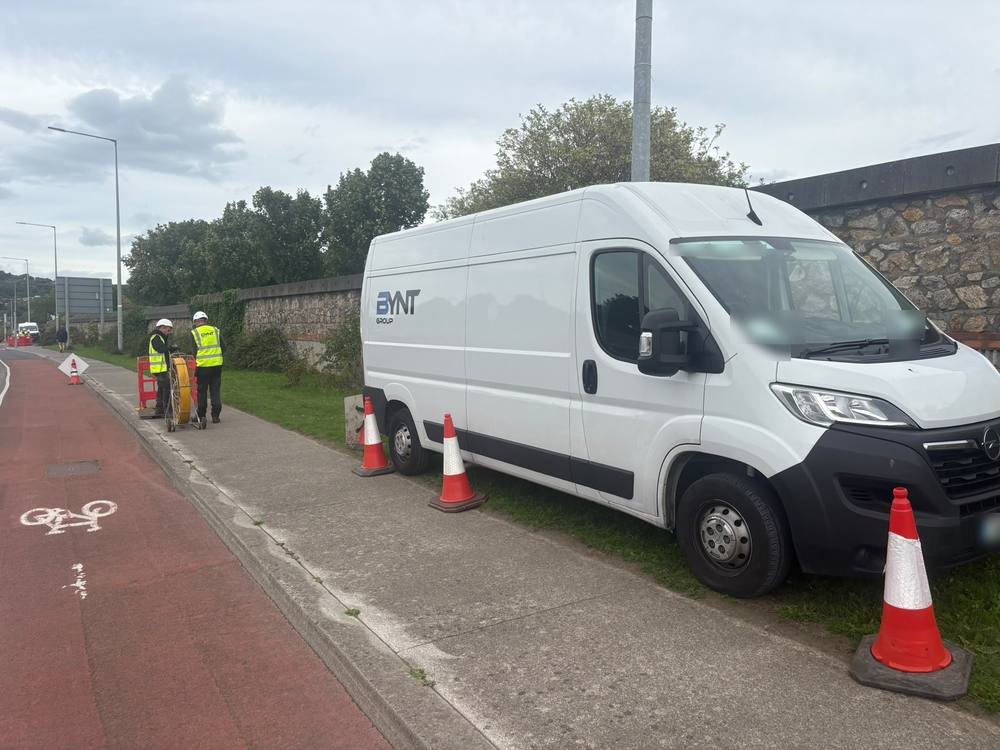
Two BYNTGroup operatives in hi-vis rodding a duct from a footway chamber, a BYNTGroup van coned off beside them
Fig. 1 — Rodding a blocked duct ahead of the build · Ireland

The work in figures

Src — National full-fibre upgrade programme, Ireland · as at September 2026
Homes constructed52,300
Homes released for sale40,000
Overhead and façade fibre436,000 m
Fibre pulled and blown231,800 m
Private wayleaves secured7,600
Duct blockages cleared5,864
TechnologyXGS-PON
— live service, with a 10 Gbps upgrade path in the same access network5 Gbps
Client investment in the programme€200m

Building inside a network that already exists

The programme does not build from scratch. It reuses what is already in the ground and on the poles — the operator’s own duct and track alongside regulated third-party duct and pole access under the PIA product, with overhead and façade routes carrying the dense urban cores where there is nowhere else to go.

That decision is what makes a national migration affordable, and it is also what makes it hard. Every metre of the route is a survey question before it is a construction task: is the duct clear, will the pole take another cable, does the wall belong to somebody who has not been asked yet. The build programme only holds if those questions are answered ahead of the crews rather than by them.

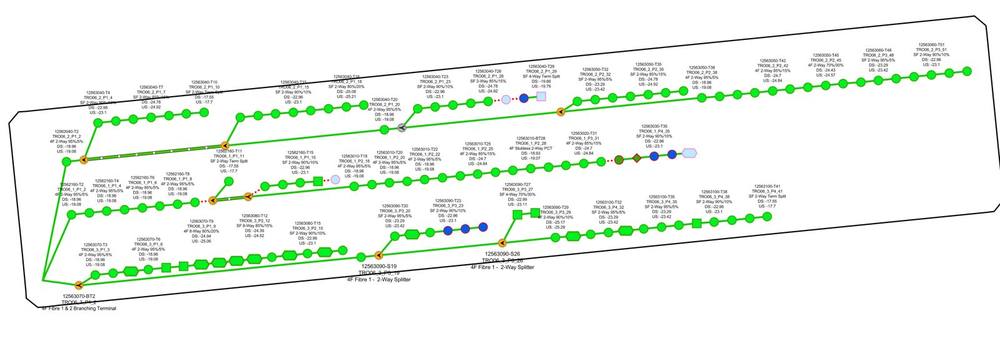
PON design schematic showing splitter nodes along four feeder routes, each labelled with its split ratio and downstream and upstream optical budget
Fig. 2 — PON design — split configuration and optical budget · Ireland

Decades of obstruction, cleared ahead of the gangs

Inheriting duct means inheriting everything that has happened to it. Collapsed sections, silt, root ingress, abandoned cable, joints nobody recorded. On this programme that came to 5,864 separate duct obstructions.

Left to the cabling gangs, each one stops a productive crew for a day. So they were taken out of the critical path: dedicated blockage-clearance crews work ahead of the cabling teams, so a blockage occupies a specialist rather than halting the build front behind it. It is a sequencing decision more than a technical one, and it is the single biggest reason the pull rate held.

Consent, three to six months ahead of the build

Overhead and façade construction across dense streets needs the agreement of the people who own the walls it crosses. Not a permit — a private conversation, one property at a time, with no power to compel an answer.

A dedicated wayleave team mobilises three to six months in front of construction and has secured 7,600 private consents to date. The measure of that team is not the number: it is that the build programme has never waited on paperwork.

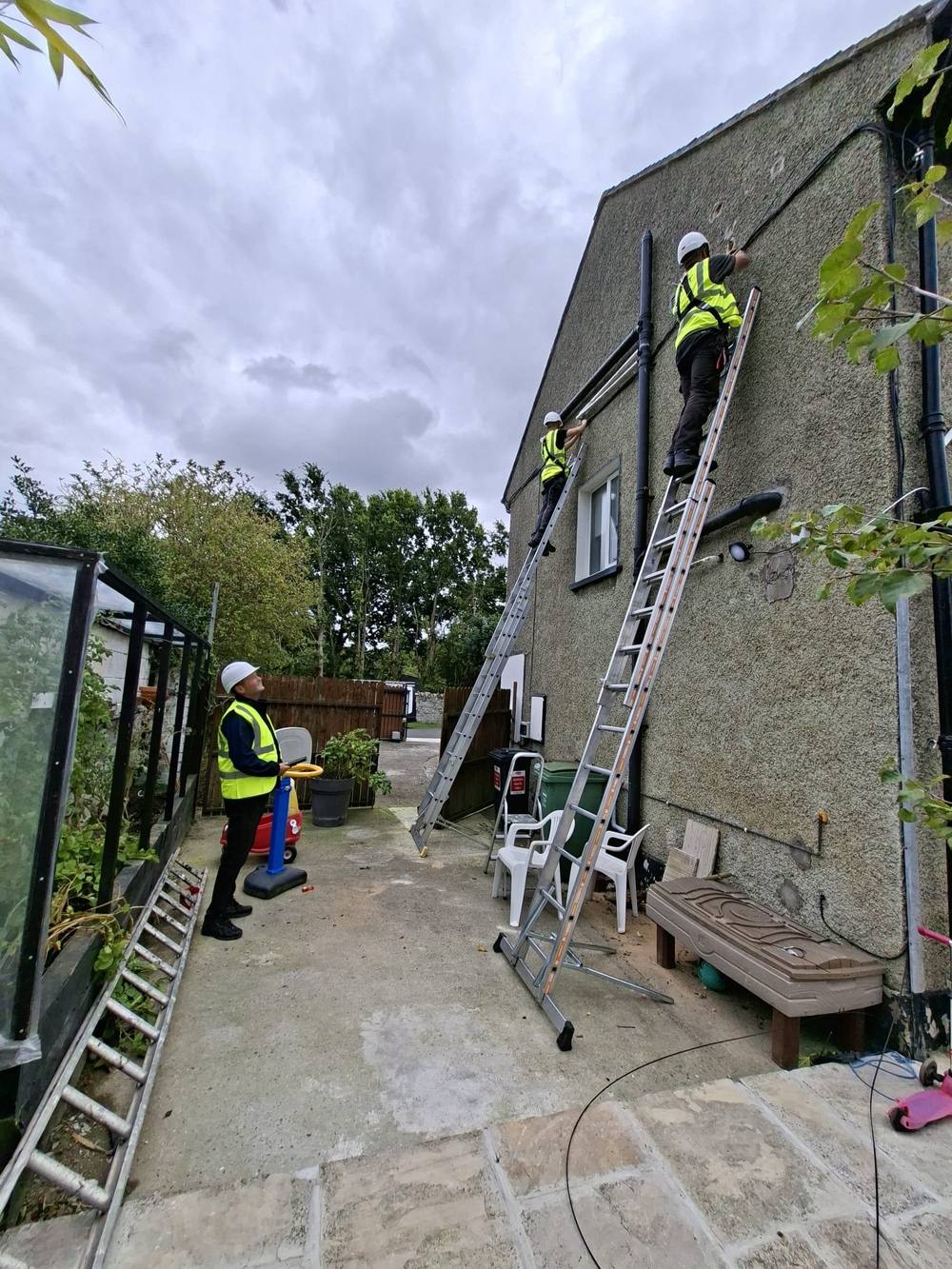
Two engineers in harnesses on ladders routing fibre along a gable wall while a supervisor watches from the yard
Fig. 3 — Façade cabling on a gable wall · Ireland
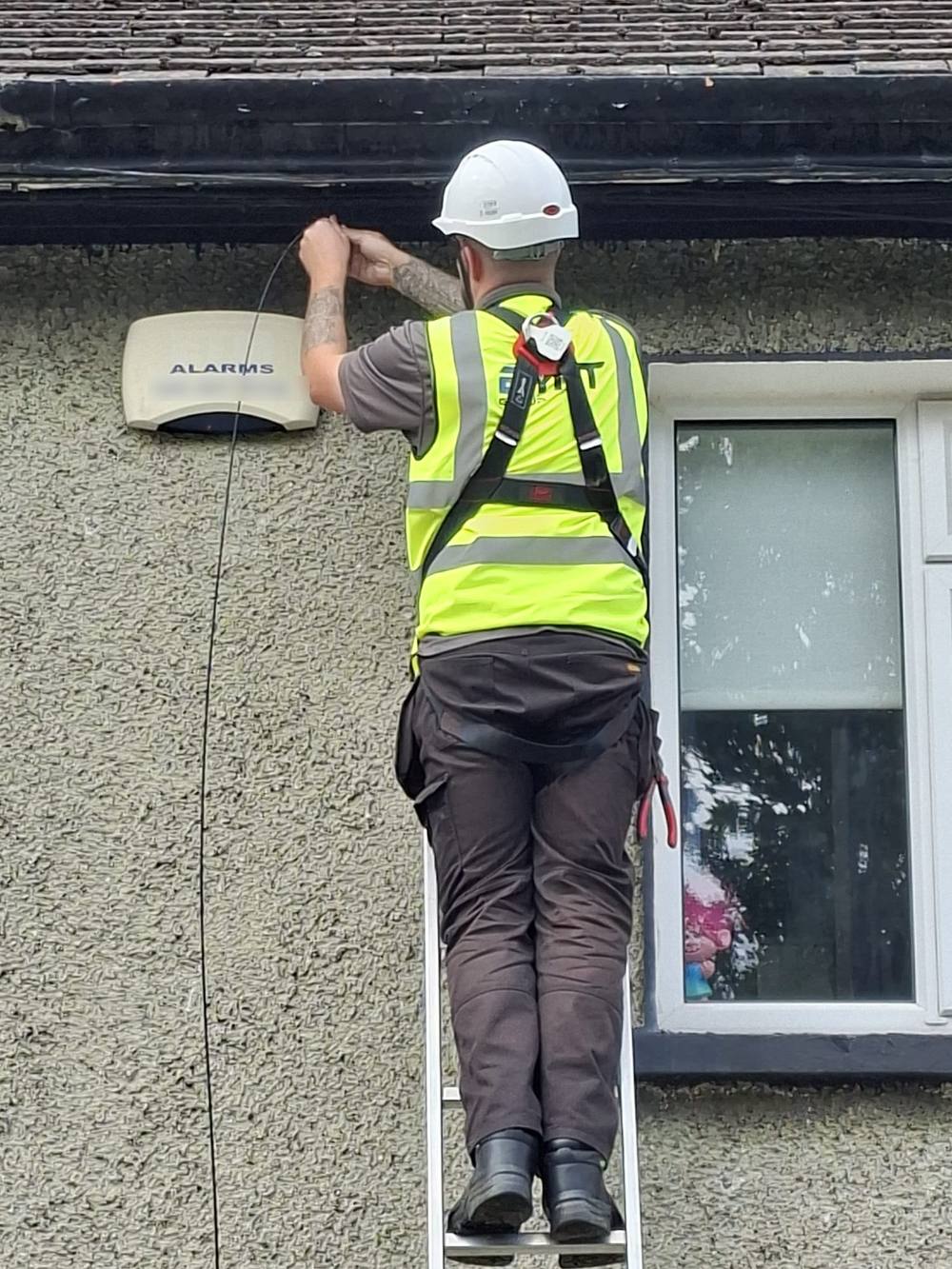
Engineer in a harness and BYNTGroup hi-vis fixing a drop cable under the eaves of a house
Fig. 4 — Fixing the drop at the eaves · Ireland

Nothing goes to market on a promise

A home is not finished when the fibre reaches it. Validated OTDR testing and GIS as-built records gate every release, and a segment goes to market when the data says it is ready rather than when the programme would like it to be.

52,300 homes constructed, 40,000 released for sale. The gap of about 12,300 homes is built but not yet released: those homes are pending testing or awaiting backhaul light. Selling a service into a segment with defects behind it does not keep the cost in construction; it turns it into failed installs, repeat visits and a customer who was promised a date.

The same programme, three times over

Running a build at this scale is a data problem as much as a construction one. The GIS platform BYNTGroup built to manage its own crews here is the reason the operator later contracted us to build the same capability for every build partner on the programme — and then added quality control on top of it.

Where this goes next

Talk to us about an FTTH programme

Tell us about the programme and we will come back with a practical delivery plan.

Start a conversation