Where the commercial case runs out.

Publicly funded rural rollout exists precisely because commercial rollout stops before it gets there. Premises are scattered, the distances between them long, and the cost per home is dominated not by the drop but by everything upstream of it — the backhaul needed to reach a community before a single home can be connected.

In rural builds, the spine decides whether the whole programme works.
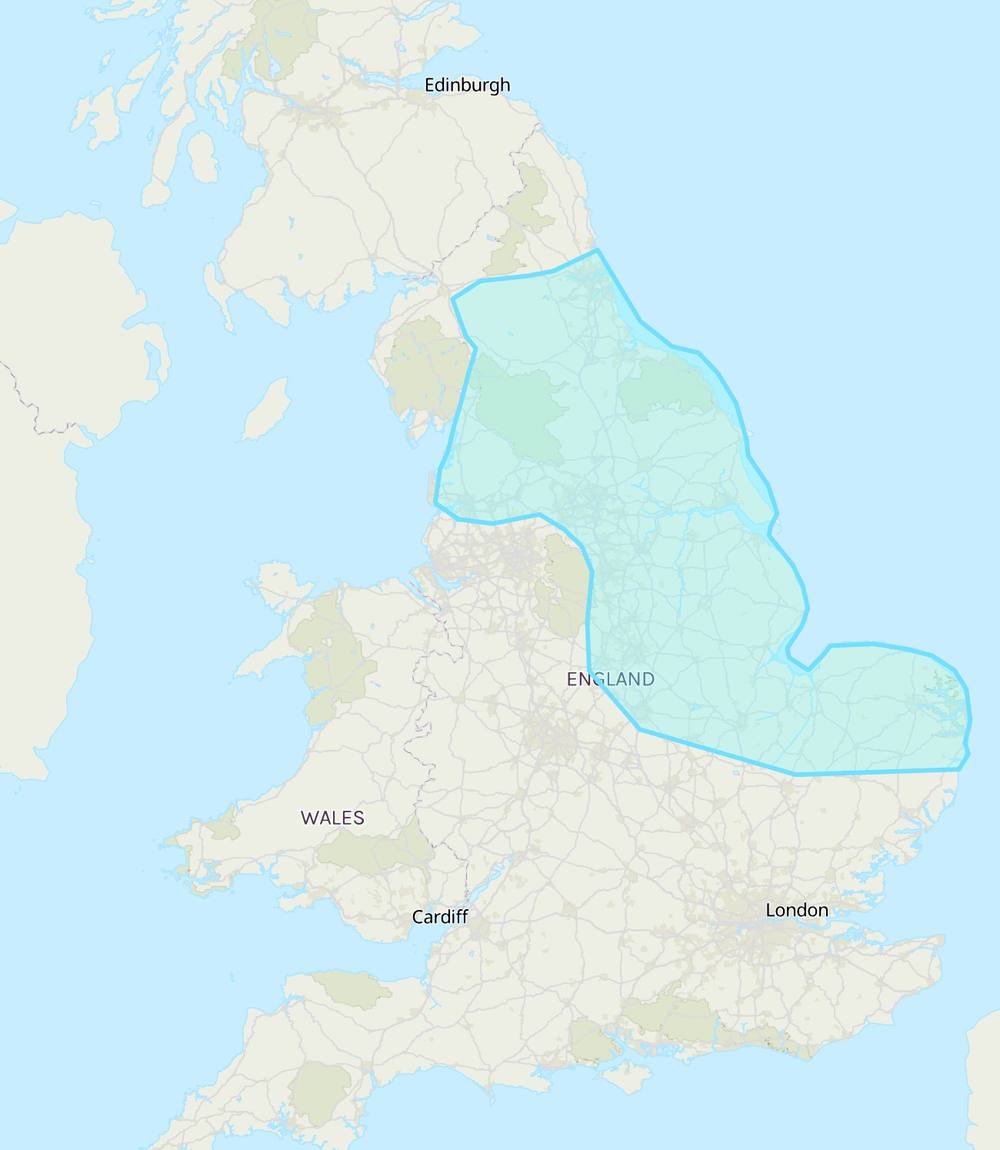
Map of the programme footprint: a single shaded region covering the north and east of England, from the Scottish border down through Cumbria, Durham, Yorkshire and Lincolnshire and east into Norfolk and Suffolk
Fig. 1 — Programme footprint

The work in figures

Src — Programme records, as at September 2026
Homes passed on the network build to date50,000+
Backhaul route856 km
— the same distance in miles and feet532 mi · 2,808,400 ft
Communities reached11
Programme2024, ongoing

What we deliver

BYNTGroup works with a large ISP delivering rural gigabit coverage across the north and east of England — from the Scottish border, down through Cumbria, Durham, Yorkshire and Lincolnshire, and east into Norfolk and Suffolk. Scope covers design and full construction: civil excavation, new pole installation, PIA access, cabling, splicing, testing, and cabinet build and test — plus the backhaul connectivity linking remote communities back into the core.

Because the programme is publicly funded, testing and evidence requirements are heavier than on a commercial build, and they cannot be deferred to the end.

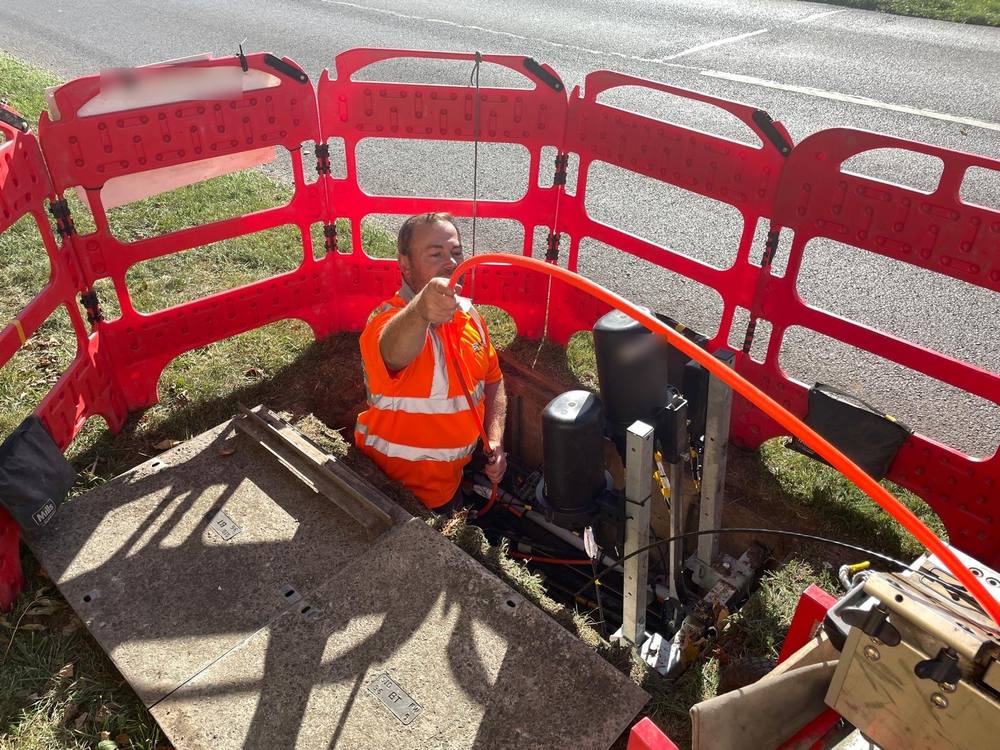
BYNTGroup engineer standing in an open roadside chamber inside red barriers, guiding an orange blowing tube down past two fibre closures
Fig. 2 — Blowing fibre from a roadside chamber · rural United Kingdom
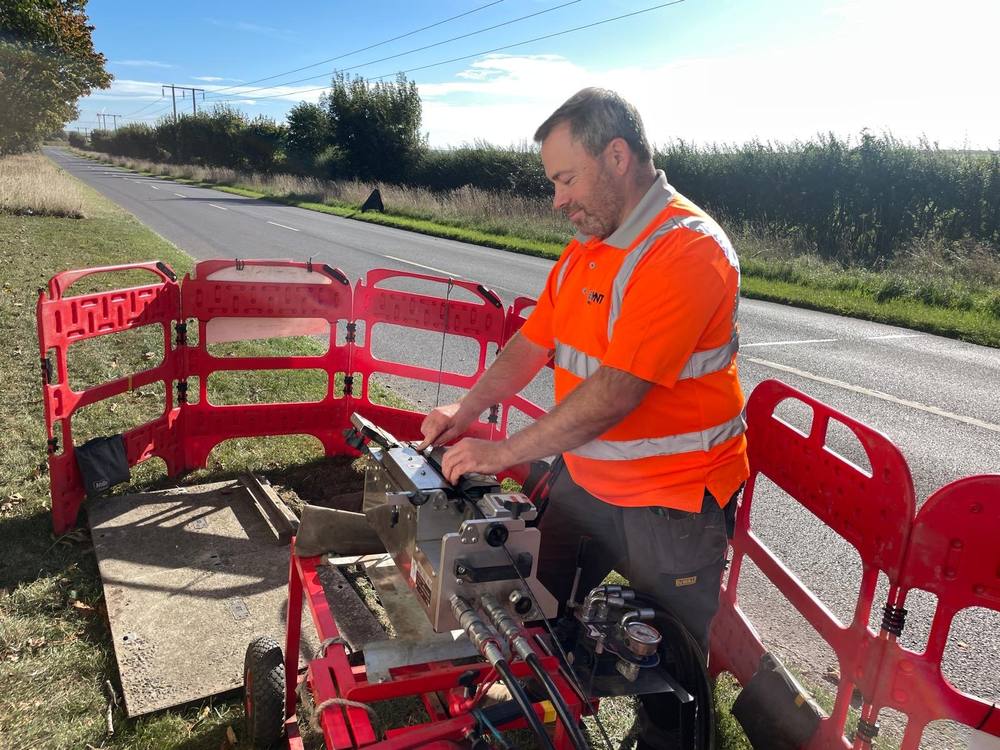
BYNTGroup engineer setting up a fibre blowing machine on a grass verge, an empty rural road running away behind him
Fig. 3 — Setting up the blowing machine · rural United Kingdom

Distance is the operational problem

Rural delivery at this range is an operational problem before it is an engineering one. Sites sit hours from the nearest BYNTGroup office or yard. Access runs on single-lane roads that will not take two-way plant movements. Excavation runs are long, and every pole is a new install rather than an existing asset to reuse.

Mobile coverage across much of the footprint is limited or absent entirely, so crews cannot rely on a live connection to reach their maps or submit their records. The field tooling has to work offline and reconcile later — which is a design decision taken at the start of a programme, not a workaround found halfway through it.

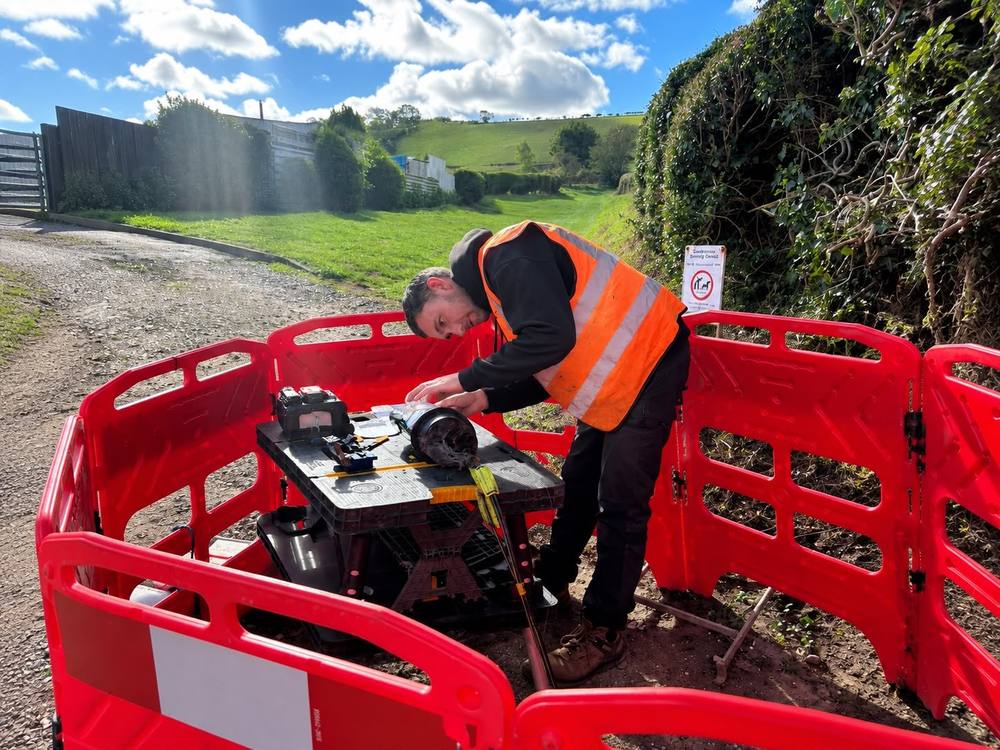
BYNTGroup engineer working a fibre closure on a work table inside red barriers, on a single-track lane with green hills behind
Fig. 4 — Splicing at an open chamber · rural United Kingdom
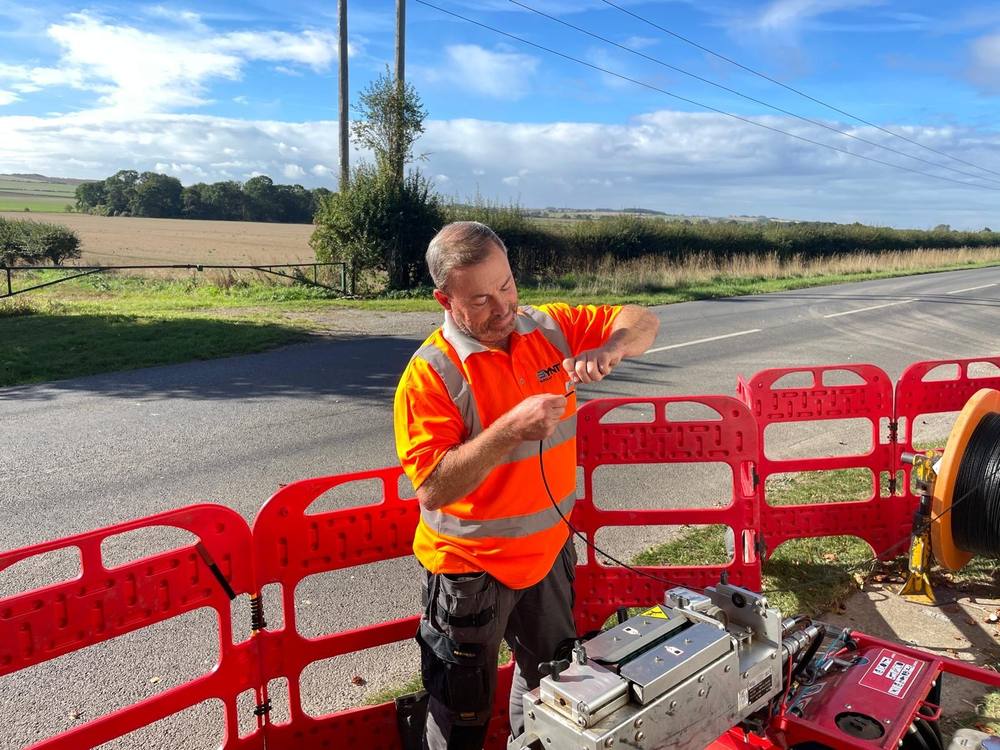
BYNTGroup engineer preparing the end of a fibre cable beside a cable drum and blowing machine, open farmland behind
Fig. 5 — Preparing the cable end · rural United Kingdom

Where this goes next

Talk to us about a rural programme

Tell us about the programme and we will come back with a practical delivery plan.

Start a conversation